
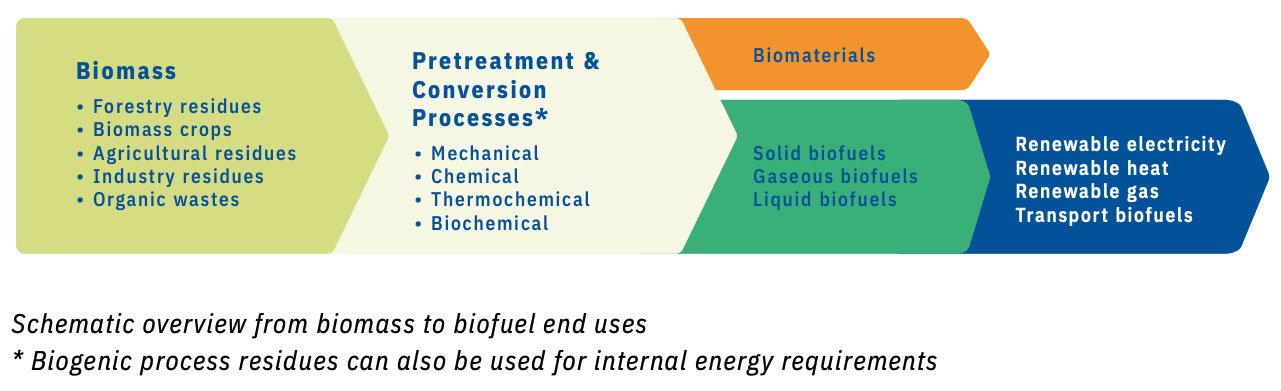
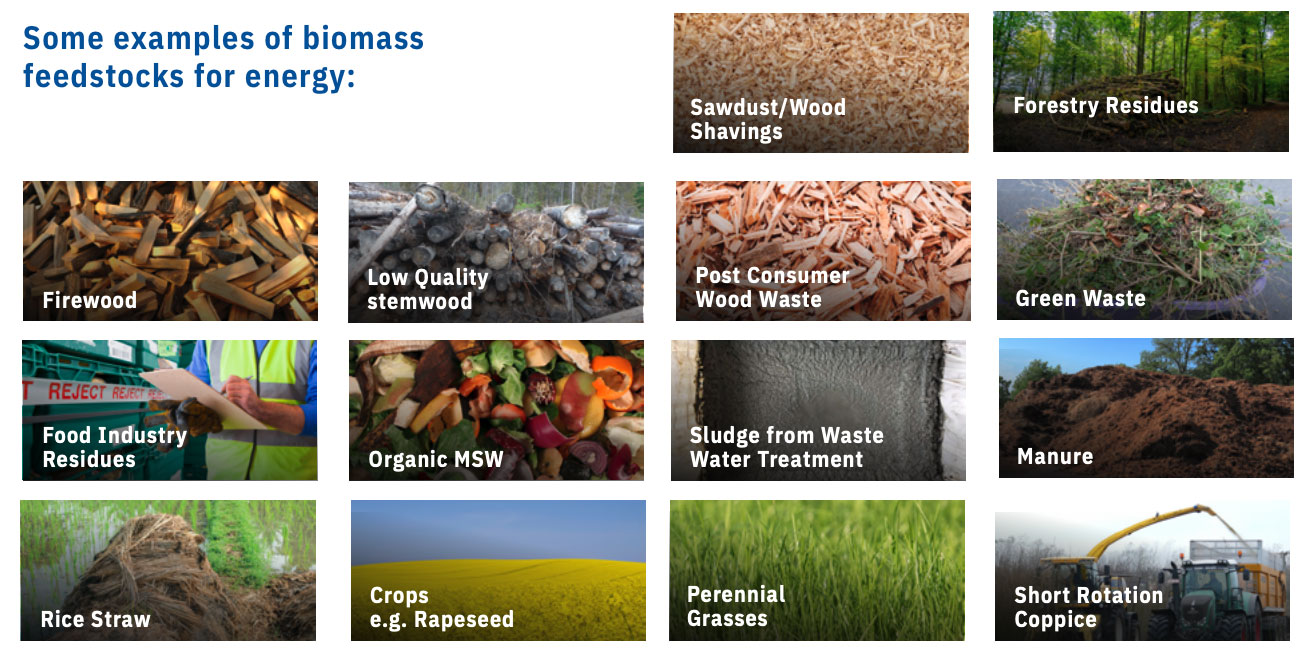
Bioenergy is renewable energy derived from biomass. Biomass is defined as organic material derived from plants and animals. Examples of biomass used for bioenergy are woody biomass, multipurpose crops and dedicated biomass crops, and organic waste/ residues from industry, agriculture, forest and landscape management, and households. The biomass is converted to solid, liquid or gaseous fuel which can be used to produce heat and/ or electricity, or can be used as transport fuel.
Types of biofuels
Biofuels are classified into three types – solid, liquid, and gaseous.
Solid Biofuels
Solid biofuels such as pellets, chips, briquettes, logs, and charcoal are typically produced from forest or landscape management residues (such as forest thinnings, tree branches and tops), forest product manufacturing residues (such as shavings and sawdust), or agricultural residues (such as wheat straw or corn stover). These fuels are renewable alternatives that can be used to generate heat in industry and buildings, or to generate heat and/or electricity in power plants, combined heat and power (CHP) plants or district heating plants.

Liquid Biofuels
Liquid biofuels such as ethanol, biodiesel, renewable diesel and biojet fuel are typically produced from agricultural energy crops, forest management and product manufacturing residues, agricultural residues, and organic wastes (e.g., waste oils). These fuels are renewable alternatives that can be blended with existing liquid fossil fuels or sometimes completely replace fossil fuels in road, marine, and aviation transport.
Gaseous Biofuels
Gaseous biofuels such as biogas, biomethane and syngas are typically produced from agricultural residues, organic wastes, and from forest management and product manufacturing residues. These fuels can be used directly to generate heat and/or power. When upgraded they can also be injected into existing natural gas pipelines or used by natural gas vehicles.
Bioenergy Today & Tomorrow
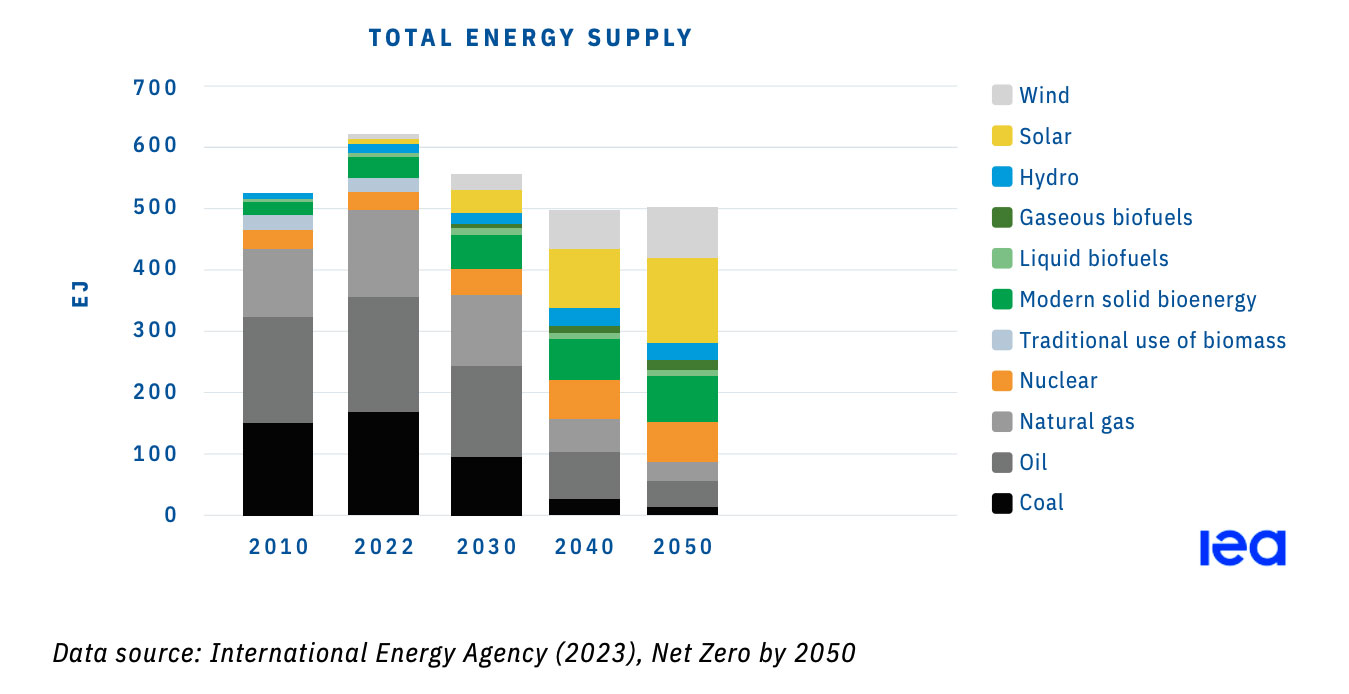
Modern bioenergy – which excludes inefficient and highly polluting traditional uses of biomass1 – is one of the largest sources of renewable energy, today accounting for over 6% of the global energy supply2. As countries look to transition to a net-zero society demand for bioenergy is expected to grow globally, next to other sources of renewable energy, while phasing out fossil fuels. The International Energy Agency suggests that bioenergy will be the second largest source of energy by 2050 making up 15-20% of the world’s total energy supply in a global net-zero economy (see figure below) with potential to remove CO2 from the atmosphere when paired with carbon capture and storage technology3.
What is Bioenergy? Download the Factsheet
Other Bioenergy Factsheets
Residential solid biofuels combustion – continuous improvement over time
Bioenergy, the carbon cycle and climate change mitigation
For an in-depth overview of the bioenergy sector and of related technologies and policies, see the Bioenergy Review.
Footnotes
- Traditional Use of Biomass: Refers to the use of biomass traditionally used for cooking and some residential space heating (e.g., firewood, charcoal) with low-level technology (e.g., open fire). ↩
- Source: IEA (2023), Tracking Clean Energy Progress 2023. Licence: CC BY 4.0 ↩
- Source: IEA (2023), Net Zero Roadmap: A Global Pathway to Keep the 1.5 °C Goal in Reach. Licence: CC BY 4.0 ↩